
How I use AI to Regulate my Nervous System
Maybe women can have it all?

Not to be dramatic, but we’re at a precipice. And Reese was right.
I’ve been talking about AI a lot more lately and maybe that’s weird because I’m a holistic health coach who uses Human Design to help you figure out how to regulate your nervous system so you can learn how to reduce chronic pain and fatigue. I got it all into one (run on) sentence but it does sound like a lot of pillars already. But AI is here now too.
Here’s the throughline:
AI has been monumental in helping me reduce mental overload, to the point where my nervous capacity has absolutely leveled up
Women need to be part of the AI conversation before it gets (completely) built without us
AI is an accessibility tool that quite literally allows some people to fulfill their purpose in life
Women Need AI
So mental load. The menty L, if you will. Women (mothers in particular) know this. It doesn’t matter how much help you’ve got. It doesn’t matter how next era feminist your husband is. I say that because I know it’s true. Everything going on in your life as well as the lives of everyone you are caring for (and to a certain extent, married to) lives in your head, rent free. Full stop.
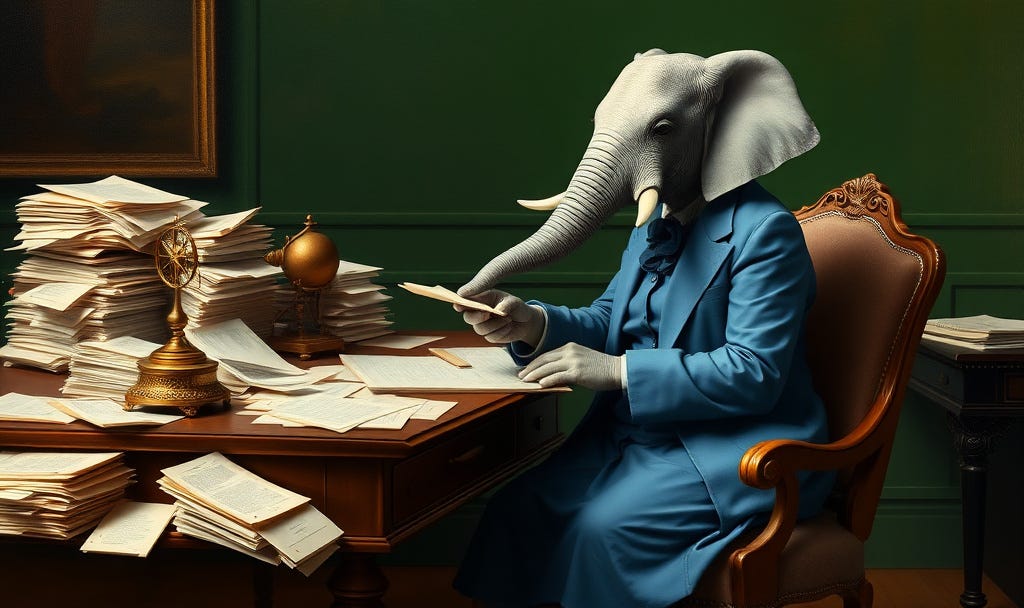
No matter what kind of delegating you are able to do with all of the things, you are the one who is doing the delegating and you are the one who needs to keep track of whether it’s working. I don’t have to explain this. You know what I mean. Inside the brain of one person lives the lives of several.
It’s fucking exhausting.
Culture took a weird turn when they “gave” women the right to work. If we look back 75 years or so, the 9-5 was predicated on the idea that men would have a wife at home taking care of the house and family. It worked out quite nicely because men could focus on their work, so it made sense to ask them to put in 40 hours. And if their work got more complicated as they rose up the corporate ladder, they’d get a secretary to take care of all their administrative bullshit. A lot of support was in place (incidentally, and not entirely unrelated with respect to the last section below, this is also probably why they used to think people “grew out” of ADHD. Girls were never diagnosed to begin with and boys grew up to be men who handed over the entirety of their executive functioning suite to the women in their lives).
Then women started fighting for workplace equality. They entered the workforce. But only on the promise that they would continue to take care of everything at home, because who else was going to do it? There was no infrastructure in place to allow for anything else. Women were mocked for wanting to “have it all”, as if it was actually selfish of women to want to be able to work and have a family. The very idea that anyone other than the mother wouldn’t be responsible for everything home and family wasn’t even considered. In 1983, “Mr. Mom” was released, a comedy premised on the absurd idea of a dad staying home to take care of his kids rather than the mom. Hilarity ensued. “3 Men and a Baby” came out in 1987, a little bit more creative with the number of dads involved but definitely also relied quite a bit on the “men have no idea how to do this” troupe to bring the laughs.
Culturally, we’ve only just reached the point where SAHD’s are culturally acceptable in the last 20 years, maybe (and it’s definitely still not common).
So it’s not surprising that even now, when we say everything is 50/50, or split in whatever actually fair way it shakes out in any given household, the mental load is still very much felt by one party.
Up until pretty recently, there wasn’t much we could actually do about it. Shift as much as we can to the other party. Outsource and delegate as much as possible. Grow old waiting for culture to change. Grow old waiting for our brains to change, because I’d argue on some level women are holding tight to the mental load because we’re sure no one else can do it as well as us. Maybe I could encourage us all to go through years of therapy to unpack that (not a bad idea), but I want to focus on what we can do now to make tangible changes.
Because now. We can change everything. I’m not kidding. We could probably take over the goddamn world if we could stop doing two things: worrying about our weight and holding the mental load.
Over the last few months, I have become absolutely enamored with AI. But it was only when I started on agentic AI that I realized this is actually life changing. The idea is simple: you give AI your menty L, one menty tab at a time. Little by little, your brain starts to clear up. I can feel it happening in real time. I can literally feel my thoughts leave my brain. (Which doesn’t sound good out of context, but feels like an absolute fucking relief).
When most people (who aren’t heavy AI users) think of AI, they probably think of generative AI. Asking questions or giving prompts and getting a result or answer. Agentic AI is so much more. Agentic AI is when you tell it do stuff for you, without you needing to prompt it every time. This is where we win all our money back. Recurring tasks to review emails, admin prep for client sessions, schedule your notes and article restacks. But as cool as all this shit is, it doesn’t compare to the most underrated aspect of what AI can do now: hold it all for you. All the things you want to come back to but can’t deal with right this minute, you can give it to Claude or Chat. Ask it to save it for later, remind you at a certain time, add it as a task to your task management platform at a later date, or just remember it until called upon. You can literally give AI the thought you’re afraid you’re going to forget, and then you can forget it. If you have experience trying to keep everything top of mind all at once just so that you won’t forget it, you can imagine how impactful this could be.
To be clear, this isn’t a magic cure or the end of the conversation as far as nervous system regulation. No amount of stress reduction is going to do the trick if you aren’t properly restoring it on the other end. Nervous system regulation is really about building capacity for and resilience to stress, which is done by both stress reduction and true restoration. (Figuring out what your body needs for real restoration is why Human Design is so useful.)
But stress reduction is still a big part of it and mental load is a pretty universal stressor (yes, even for men, even if not as pronounced). It’s really not good for anyone. Any amount that you can reduce it will be beneficial.
So while we wait for true gender equality (lol), let’s practice some real self-care: make shit easier for yourself.
AI Needs Women
The other reason I’m so passionate about women using AI is not proximally related to nervous system regulation. But you could certainly argue that the more fucked over women get by society, the worse our stress gets. (And I do argue that.)
Women aren’t using AI as much as men. I don’t know of the exact numbers, but early data on this suggests women use generative AI about 22% less than men. I haven’t found the data (if any) on the breakdown on agentic AI but I would guess the gap is even wider there. Women are more likely to site privacy and/or environmental concerns. I’m not going to harp on these too much because that’s not really what this article is about. Privacy concerns are valid but I think there’s a certain amount of risk that’s worth taking, with the right guardrails up. My POV. Risk tolerance is uniquely personal though so it’s not something I’m going to try to argue.
But the individualization of responsibility for systemic environmental problems is just a fallacy, and it’s been played out before. It’s harkening back to “recycle, reduce, reuse” (and “close the loop” all the readers of a certain age just sang to themselves), a misguided campaign that treated recycling and not wasting electricity as the primary solutions to saving the planet while ignoring the actual sources of the problem. Because it is a powerful distraction, it is the very type of policy that allows corporations to get away with what they’re doing. If we stopped framing it this way, we might be able to get some actual change, like other countries are moving to. AI companies need to get their shit together and figure out how to do things differently. But the users aren’t the problem nor should they be held responsible.
In the meantime, women are getting left out of the whole conversation. This is a huge problem.
AI is taking in everything we’re giving it and the people giving it everything are mostly men. Which means that AI is naturally learning how men think and less like how women think. This has repurcussions in every aspect of life. Like how AI is learning how to reject women’s resumes without knowing the gender of the applicant based on biases it is learning. (I know there are more examples, but I wanted to get this article out, so I’ll come back and edit them in when I find them. If you have any, please leave them in the comments!)
The less women use AI, the more it develops without the input of women. The question is not “do we use AI?” because AI is going to happen, with or without us. If it happens without us, we get left behind. If we’re part of the conversation, we get to help shape it.
AI as an Accessibility Tool and the Meaning of Life
This cannot be overstated: people with neurodivergences and disabilities really, really benefit from AI. It allows you to communicate with the world when communication was too difficult before. It allows you to complete administrative tasks that were too much of an obstacle without the requisite executive functioning skills. For people whose brain feels foggy, chaotic, messy, disorganized, or overstimulated, AI can be the key to getting the thoughts out of their brain and onto the path of something that they can share with others, whether that’s through writing or creating, or in any other setting where they were struggling before. As a neurodivergent woman with chronic health issues, this is absolutely true for me. I know what falling apart feels like. I know what can’t get out of bed for months feels like. AI helps me do what I love without burning myself into the ground or making terrible errors due to an almost concerning level of forgetfulness. From a nervous system perspective, this is so much more than reducing the stress of all those obstacles. Accessibility means being able to find meaning and fulfill your purpose in life. I don’t think I need to convince you that meaningful work is a worthwhile goal all on its own, but it’s also incredibly regulating to the nervous system. (Some reading suggestions: Man’s Search for Meaning by Viktor Frankl; The Upside of Stress by Kelly McGonigal)
Once we accept and classify AI as an accessibility tool we can move past the “should we allow AI” discourse and solidly into the “how do we do AI” conversation. If manufacturing glasses killed a baby dolphin every time a pair of glasses got made, we would not stop making glasses. We would very quickly figure out how to make them without killing baby dolphins. I don’t know how to make them stop killing baby dolphins, but compounding systemic disadvantages by refusing to use AI isn’t the answer.
**
So, I wrote an article about how I use AI to regulate my nervous system that reads more like why women should be using AI. Low key sorry if that seems like a tricky move but I stand by it because it’s the same thing. Women need to be doing AI because their bodies demand it.
But in case you were looking for some more concrete examples on what I actually do with AI that helps me unburden all my bullshit, I’ll get into those in part 2 (using regular people language, which will also demonstrate how easy it actually is). For the time being, I just want you to take in how important this moment in time is. It’s a precipice.
A little about me….
I’m Niki, a holistic health and Human Design coach. Recovering lawyer turned SAHM turned health obsessed turned questioning midlifer.
I spent years being told my labs were “fine” while my body fell apart, until I connected the dots between stress, the nervous system, and physical symptoms. I realized the stress about the cookie was worse than the cookie.
Human Design gave me the missing piece: a way to understand my own wiring instead of fighting it.
Lately I’m also writing about AI a lot. It’s turned into a real nervous system tool for reducing mental load, and I think women should be fluent in it before it gets built without us.
Looking for more support?
Join my fall waitlist if you’re interested in my 6 month 1:1 container
My paid tier includes a personalized Human Design snapshot report with nervous system insights
Throughline members also get an annual Human Design session with me
*****
Disclaimer: The content in this article is for informational and educational purposes only and is not intended as medical advice, diagnosis, or treatment. Always consult a qualified healthcare professional regarding any medical concerns or before making changes to your health, diet, medications, or treatment plan.
AI Statement: I fucking love AI. I’m very open about it. However, I refuse to participate in AI detector bullshit. AI detectors reproduce racial bias by disproportionately misclassifying the writing of people of color and multilingual writers as non-human. Requiring people to prove or justify how they write also unfairly targets disabled and neurodivergent people who may rely on AI as an essential accessibility tool. I refuse to participate in a practice that reinforces racism, punishes disability, and treats access needs as evidence of wrongdoing. I will not be justifying my use of AI nor attempting to downplay it.
Please judge my work (and all work) by how it makes you feel. Do not outsource your decision-making power to a machine.
Brilliant article! I've recently started using Claude for our meal prepping at home and I absolutely love it! A scheduled weekly task with recipes we like and no more overthinking of meals and shopping lists...
Brilliant! I sometimes feel I have to hide my use of AI. But it's helped me so much on the life management side as an older neurodivergent woman who is trying to heal long-term nervous system dysregulation. Thank you, Nikki.